
BioLynceus Lot 125
Revegetation in a Mining Zone
Revegetation is a powerful tool used to retain mine drainage and stabilize waste rock piles after mining activities. However, promoting plant growth on mine waste rock piles can be challenging. These environments typically have limited topsoil development and steep slopes, which can prevent the root formation of planted vegetation.
Applying biologically enhanced soil amendments to revegetated areas can increase plant density and root zone development. In the following case study, BioLynceus® Lot 125® and Seaweed Cream® were combined with mulching and hydroseeding methods to reclaim a mine waste rock pile.
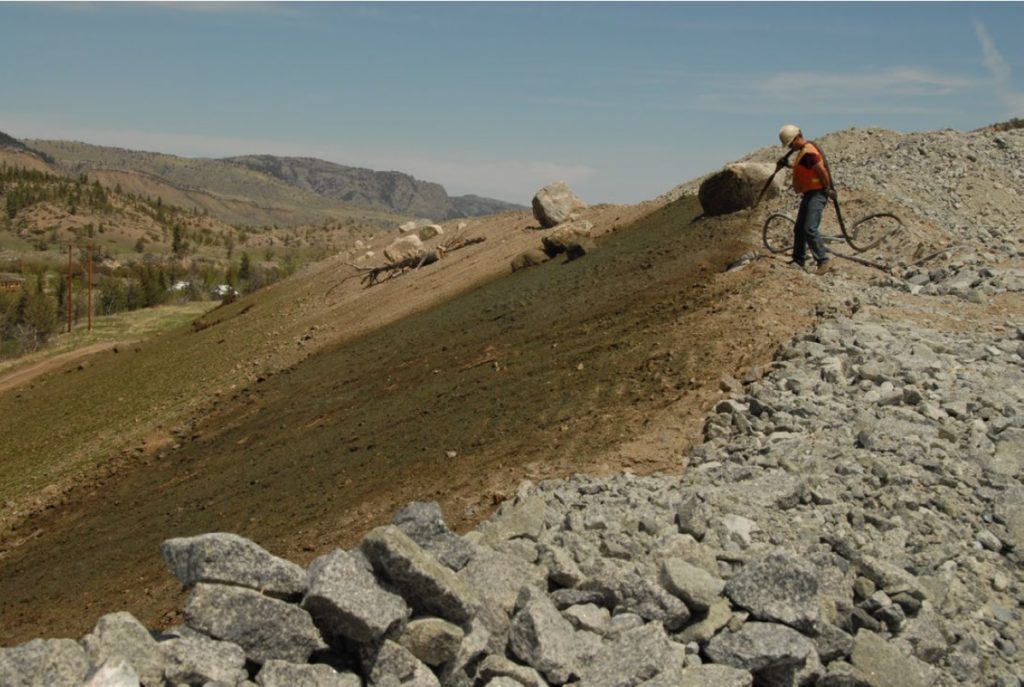
Figure 1. BioLynceus® products were applied to the waste rock pile in hydroseeding fluid.
A mining operation in Montana needed to revegetate four to five acres of waste rock. The pile had a steep slope, and the topsoil (when there was the presence of topsoil) was coarse-grained. Furthermore, the available growing medium on the slope was low in organic matter.
Before starting the project that year, the mine supervisor was approached by a BioLynceus® Representative. He provided several examples where Lot 125® and Seaweed Cream® improved root zone development and overall plant health for previous clients. The supervisor decided to try the products on one acre of the mine waste pile.
Lot 125® and Seaweed Cream® were added to the liquid seed applied to the rock slope. Hydroseeding methods were employed to spray the live culture mixture onto the mine waste. Additionally, mulching was applied to the slope to enhance water retention and stability while the seeds germinated.
The added bioaugmentation cultures helped promote nutrient fixation and uptake in the presence of limited organic matter.
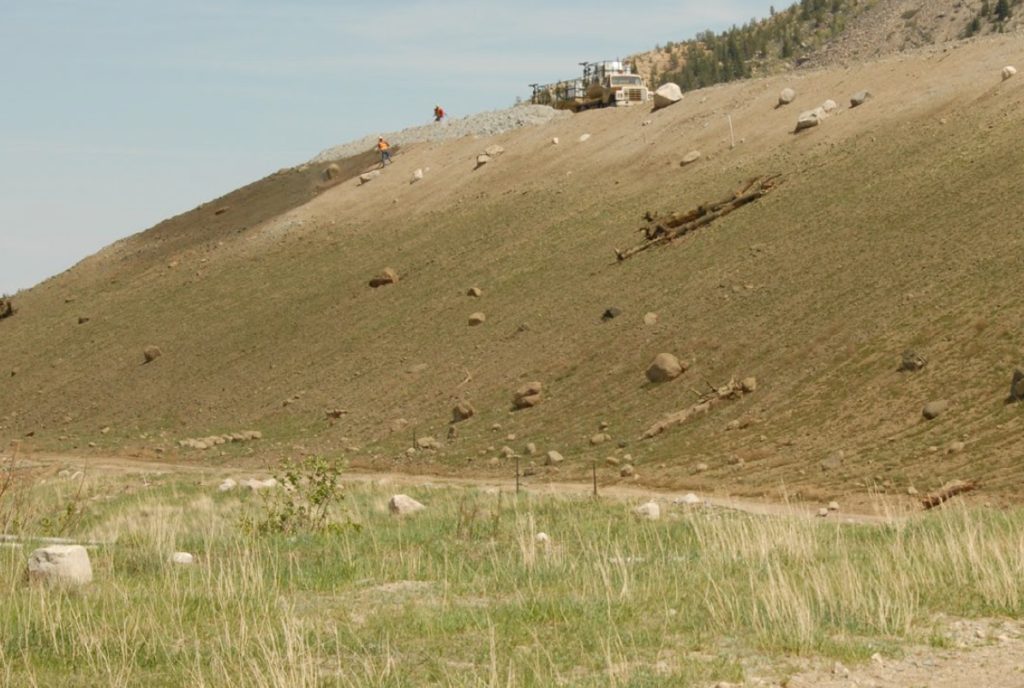
Figure 2. The study waste rock pile in the second growing season with BioLynceus® bioaugmentation. The vegetation on the lower part of the slope was grown with Lot 125® and Seaweed Cream® the previous year. The full pile was inoculated with the product in the second year because the plant density was greater in the treated area.
In the first growing season, the plant density was greater in the area of the slope where Lot 125® and Seaweed Cream® were applied. The roots that developed in this test plot were thicker than those where the products were not used.
Additionally, the mine supervisor reported that the overall health of the vegetation had improved. Plants were fuller and greener.
The mine continued to implement BioLynceus® products the following year. Instead of limiting bioaugmentation to one acre, Lot 125® and Seaweed Cream® were applied to the entire mine waste pile. Plant density and root formation were improved across the area.
The vegetation that grew was healthy even though the growing conditions were not ideal. The company still uses these products today. BioLynceus® live culture soil amendments helped to effectively revegetate the mine waste pile.
Recent Comments